
Kate Gleason 1865-1933
American inventor
a trailblazing entrepreneur and innovator who revolutionised the gear industry and pioneered affordable, mass-produced concrete housing, becoming the first female member of the American Society of Mechanical Engineers.
Kate Gleason: A Legacy of Innovation
Kate Gleason (1865–1933) was the epitome of a woman with her fingers in many pies. Born Catherine Anselm Gleason in Rochester, New York, she immersed herself in the family-owned Gleason Works, serving first as an engineer, then as an entrepreneur, a banker, a builder, and finally, a social reformer.
Gleason was born at a time when engineering as a discipline was shifting from a practical trade to a professional role requiring higher education (1). Gleason herself enrolled in engineering courses at Cornell University’s Sibley College of Engineering and Mechanic Arts in 1884—the first woman to do so—but never completed her degree. Instead, she was called home by her father to focus on her roles within the family business. She arrived to find the business struggling financially.
It has been reported that Gleason started work at Gleason Works from the age of 12 (2), working on Saturdays. During her time at the company (which she left in 1913 or 1914), she worked in numerous capacities, including bookkeeper, salesperson, treasurer, and finally, owner. Whether she ever worked strictly as an "engineer" is debated. Whilst she is often heralded as a "female engineer" icon and cited as the inventor of the Bevel Gear Planer, it was actually her father who held the patent from 1874—a truly remarkable feat had she invented it at the age of nine. She herself wrote that her "place in the business is Secretary and Treasurer… neither of them have anything at all to do with designing.”(3)
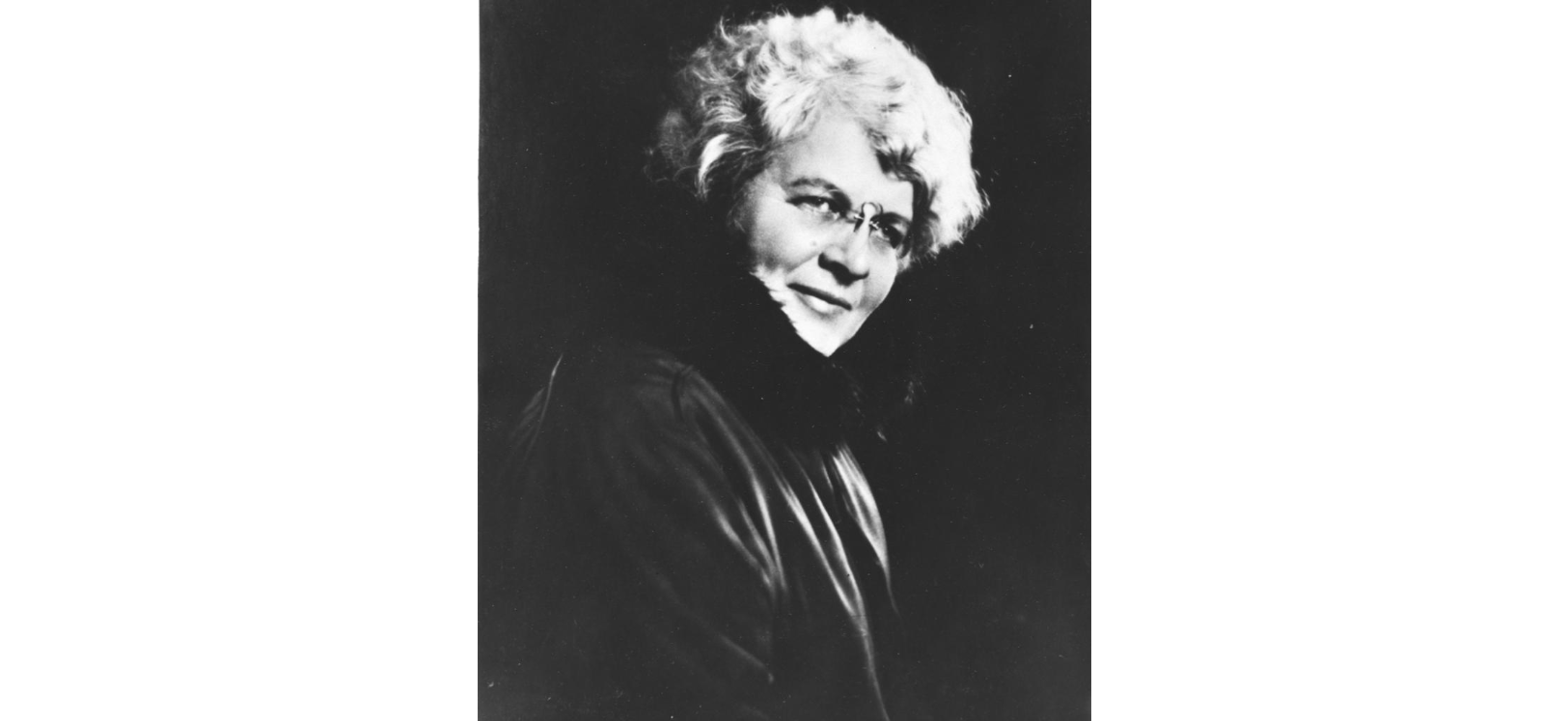
Kate Gleason, RIT Archive Collections
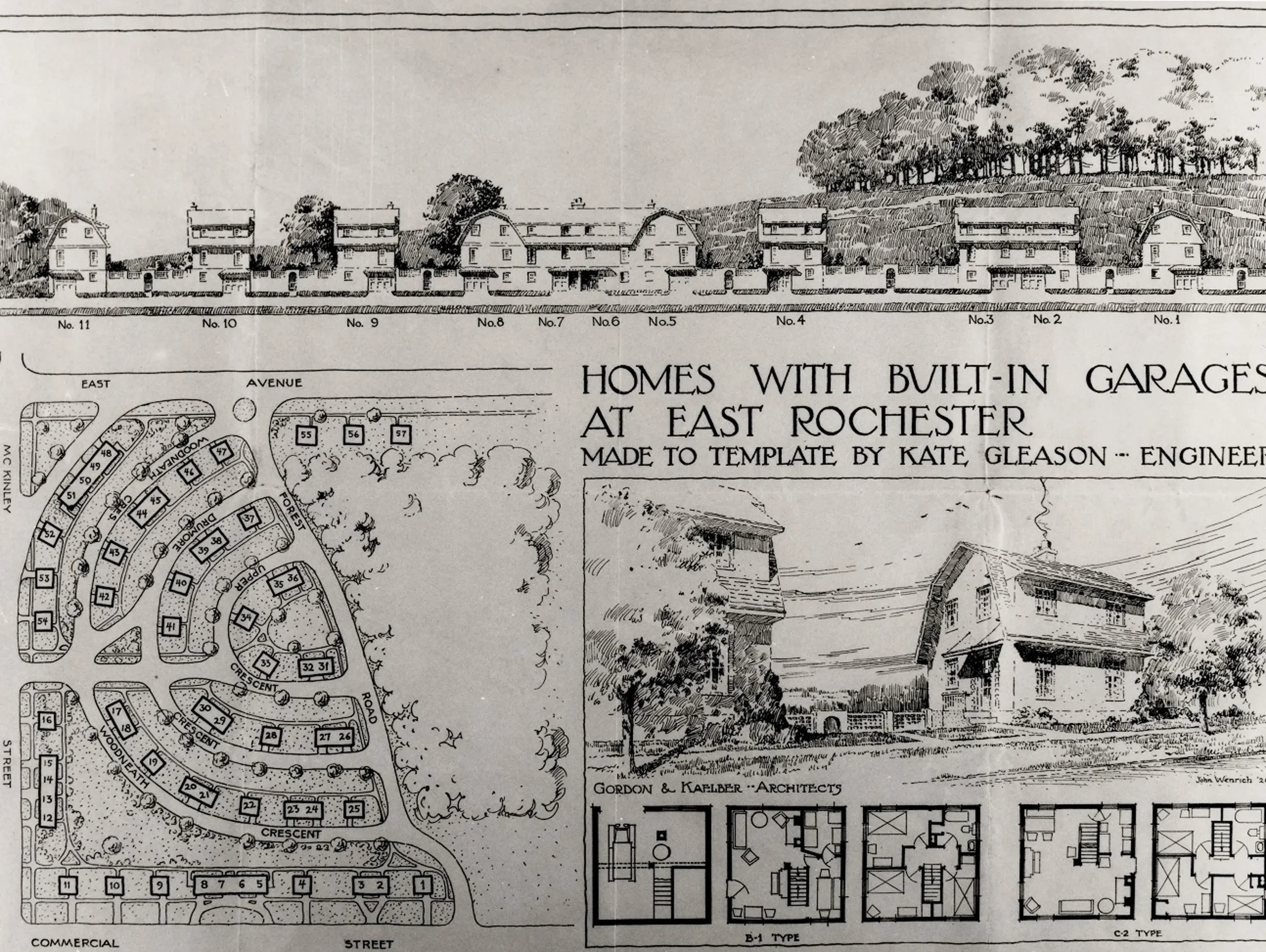
Concrest Development Map, Village of East Rochester
Whilst she may not have been directly responsible for the design of the Bevel Gear Planer, her accomplishment stemmed from her recognition that the automotive industry was about to explode and that cars would require high-quality, reliable gears to function. It was this realisation that saved Gleason Works and allowed the company to thrive.
Thus, Gleason became the ultimate salesperson for the company at a time when a woman travelling alone on business was considered scandalous. She secured massive contracts with companies such as Cadillac and Packard, effectively positioning Gleason Works as a cornerstone of the burgeoning American automotive industry. Her ability to converse on a level with engineers and then negotiate with executives made her a legend in the field. Her contributions were recognised when she became the first woman to qualify as a member of the Rochester Chamber of Commerce (1916) and the Rochester Engineering Society (1917), before finally being elected to membership in the American Society of Mechanical Engineers (ASME) in 1918. (4)
After leaving the family business, she turned her sights towards finance and construction. During the First World War, she was appointed president of the First National Bank of East Rochester—becoming the first woman in the United States to preside over a national bank. It was during her time at the bank that Gleason started what would arguably be her greatest accomplishment: the development of low-cost housing.
In the early 1920s, she developed "The Clones"—a series of affordable homes built using concrete, applying similar mass-production values to those she had observed at Gleason Works and the Cadillac factory (4). The site, known as the Concrest Community, consisted of fireproof, concrete houses developed using a pouring method Gleason herself devised, so that the homes could be sold for no more than $4,000 (6).
Gleason never married nor had children. Upon her death in 1933, she bequeathed a large proportion of her estate to the Rochester area, including funds to aid the development of parks and libraries. Gleason Works, which she was fundamental in saving from financial ruin, later became the Gleason Corporation and remains in operation today. In 1998, the Rochester Institute of Technology (RIT) named its engineering college in her honour (5).
Sources
(1) Brown, M. J., Edwards, R., and Lent, T. O., 2017. Remembering Kate Gleason: Introducing a Twentieth-Century Businesswoman to Twenty-First Century Students. The Seneca Falls Dialogues Journal 2(3)
(2) Harackiewicz, F. J., Chevalier, L. R., and Palmer, S. C., 2001. Notable Engineers: A Project Book. International Conference on Engineering Eduction. 6B7
(3) Gleason, J. F., 2010. The Life and Letters of Kate Gleason. RIT Press, Rochester, NY
(4) Weingardt, R. G., 2002. Kate Gleason and Roy Peratrovich Jr. Leadership and Management in Engineering. 2(4) pp.55-58
(5) RIT Kate Gleason College of Engineering https://www.rit.edu/engineering/about
(6) Rochester Voices Kate Gleason Letters https://www.rochestervoices.org/collections/kate-gleason-letters/